Overview
Himalayan Jyotirlinga of Lord Shiva in Garhwal, open only in the summer yatra season and reached by a long mountain trek from Gaurikund.
History & significance
The story of Kedarnath
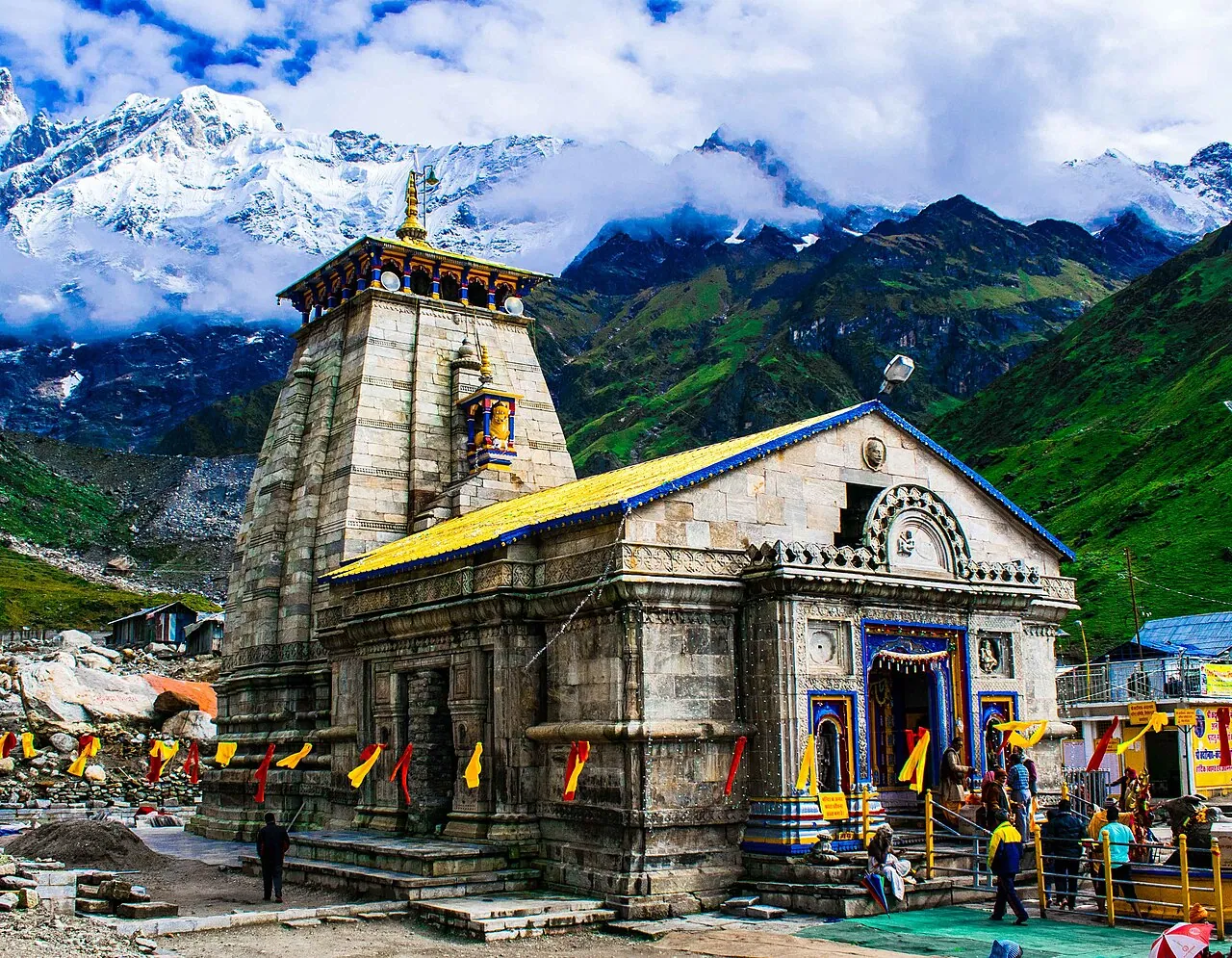
Kedarnath stands high in the Garhwal Himalaya, at roughly 3,580 metres according to the Shri Badarinath Kedarnath Temple Committee (BKTC), and is counted among the twelve Jyotirlingas of Lord Shiva. According to the tradition the committee records, the Pandavas sought Lord Shiva after the Kurukshetra war to be freed from the sin of killing their kinsmen. The Lord avoided them in the form of a bull and sank into the earth here, leaving the hump above the ground, which is worshipped in the shrine. Devotees believe other parts of His form appeared at Tungnath, Rudranath, Madmaheshwar and Kalpeshwar, which together with Kedarnath are known as the Panch Kedar.
The temple committee associates the present stone temple with Adi Shankaracharya and describes it as more than a thousand years old, while also recording the tradition that the Pandavas first built a shrine here.
Because of snow, the shrine is open only for part of the year. At the start of winter the utsava (festival) form of the Lord is carried down to Ukhimath, where worship continues through the cold months, and it returns to Kedarnath when the temple reopens in the Vaishakha season (April–May) on a date the committee announces.
Highlights
- One of the twelve Jyotirlingas of Lord Shiva
- Open only in the summer yatra season; winter worship at Ukhimath
- Trek of about 16 km from Gaurikund (pony, palki or helicopter options)
- Part of the Panch Kedar and the Char Dham yatra of Uttarakhand
- Prior yatra registration with the Uttarakhand government is advised
Gallery
Kedarnath in pictures
Plan your darshan
Darshan & seva timings
- SeasonOpen only in the yatra season, roughly April/May to October/November
- Evening aarti (BKTC, summer)around 6:00 PM
Kedarnath is closed through the winter, and daily darshan hours are not published in detail on the official site. Please confirm current timings and the season's opening and closing dates with the Shri Badarinath Kedarnath Temple Committee before you travel.
Main festivals
Opening of the doors (kapat opening)
Vaishakha season, April–May; date announced by the temple committee
Maha Shivaratri (opening date announced)
February–March, while the shrine is closed
Closing of the doors for winter
Kartika season, October–November
How to reach
Getting to Kedarnath
Kedarnath is more than 2,000 km from Visakhapatnam. Most pilgrims fly or take a train to Delhi, Haridwar or Rishikesh, travel by road to Sonprayag and Gaurikund, and then trek up.
By road
Roads from Rishikesh and Haridwar run via Rudraprayag to Sonprayag and Gaurikund; from Gaurikund the route to the temple is on foot, pony or palki.
By train
Rishikesh and Haridwar are the usual railheads for the drive into the mountains.
By air
Jolly Grant Airport, Dehradun, is the nearest airport; helicopter shuttles to Kedarnath are booked only through the IRCTC heli-yatra portal.
Location
Location & directions
Shri Kedarnath Temple, Kedarnath, Rudraprayag district, Uttarakhand 246445
Good to know
Frequently asked questions
When is Kedarnath temple open?
Only during the summer yatra season, usually from April or May to October or November. The committee announces each year's dates; in winter the Lord is worshipped at Ukhimath.
How long is the trek to Kedarnath?
Uttarakhand Tourism describes a route of about 16 km from Gaurikund. Ponies, palkis and helicopter shuttles are available for those who cannot walk.
Do I need to register for the Kedarnath yatra?
The Uttarakhand government runs an online registration portal for the Char Dham yatra. Register before you travel and carry ID.
How do I book a helicopter to Kedarnath?
The temple committee states that helicopter tickets are sold only through heliyatra.irctc.co.in. Beware of other sites claiming to sell them.