Overview
Hilltop shrine of Sri Varaha Lakshmi Narasimha in Visakhapatnam, where the Lord stays covered in sandal paste except on Chandanotsavam day.
History & significance
The story of Simhachalam
Simhachalam, a name that means the hill of the lion, is a range of hills about 16 km from Visakhapatnam. On it stands the temple of Sri Varaha Lakshmi Narasimha Swamy, where Lord Vishnu is worshipped in His Varaha Narasimha form. Devotees across north coastal Andhra call Him Simhadri Appanna.
For almost the whole year the Deity is kept covered in sandalwood paste. Only on Chandanotsavam, which falls on Vaisakha Shuddha Tadiya (Akshaya Tritiya), is the paste removed so that pilgrims can see the Lord's original form (nija rupa darshan). According to temple tradition, the Deity is then covered again with about twelve manugus of fresh sandal paste.
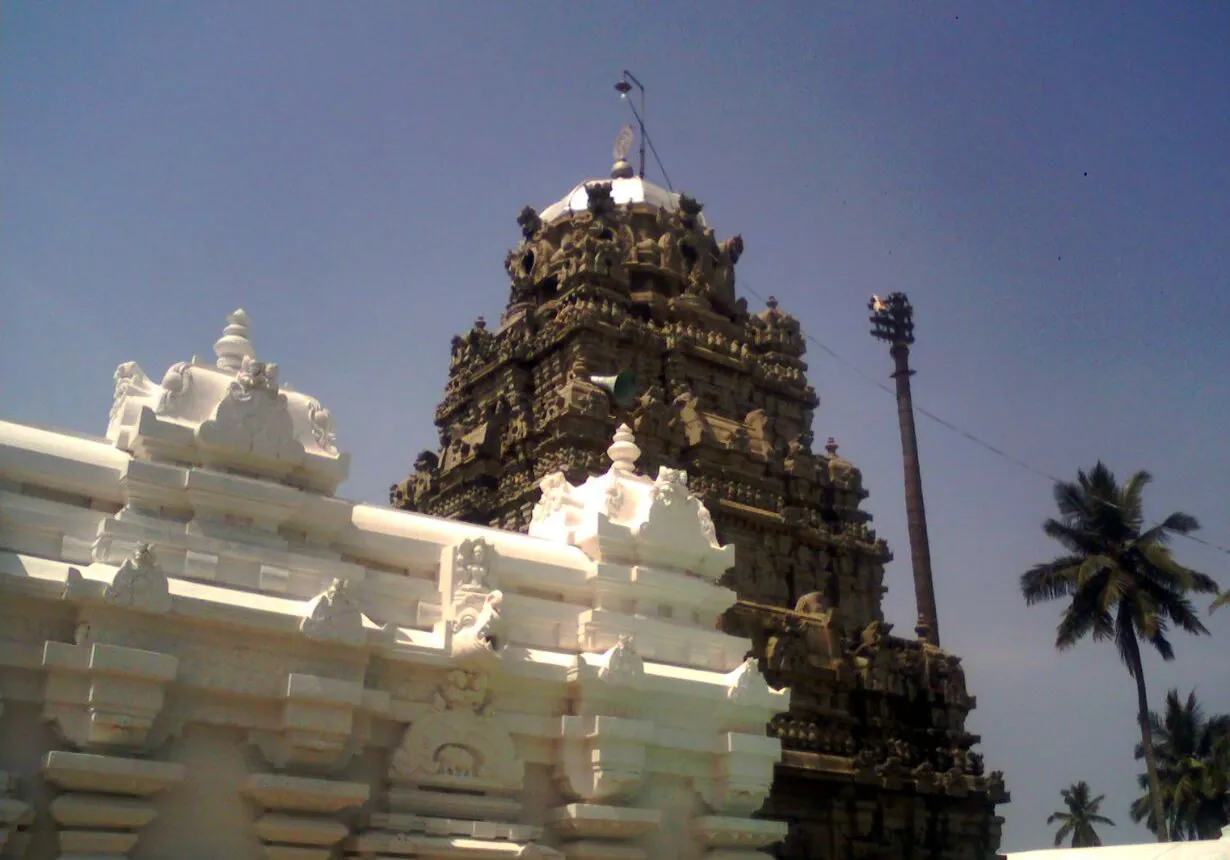
The temple is built of dark granite and is richly carved; it faces west and has a stone chariot with stone wheels and horses. Its inscriptions include records of the Chola king Kulottunga I (1098–99 CE), the Velanadu chief Gonka III (1137–56 CE) and the Eastern Ganga king Narasimha I, who built parts of the central shrine. The Kappa Stambham pillar is believed by devotees to have healing powers.
The Chaitanya Charitamrita records that Sri Chaitanya Mahaprabhu visited this Deity, called there Jiyada Nrsimha, during His South India tour; seeing the Lord, He offered obeisances, then danced, sang and offered prayers in ecstatic love.
Highlights
- Lord worshipped in His Varaha Narasimha form
- Nija rupa darshan only once a year, on Chandanotsavam
- Visited by Sri Chaitanya Mahaprabhu (Jiyada Nrsimha)
- Granite temple with inscriptions from the 11th century onwards
- About 16 km from Visakhapatnam
- Natya Mandapam with 96 black stone pillars, where Kalyanotsavam is held
- Inscriptions of Sri Krishnadevaraya from 1516 and 1519 CE
- 32 km Giri Pradakshina around the hill on Ashadha Purnima
Simhachalam
Legend and tradition
According to temple tradition, the devotee Prahlada built the first temple here for Lord Narasimha. Over time the shrine was buried under earth. Tradition holds that Pururava, a king of the Lunar dynasty, was drawn to the hill, unearthed the Deity and consecrated Him again.
Devotees believe a divine voice then told the king to keep the Lord covered in sandal paste and to remove the covering only once a year, on the third day of the bright half of Vaisakha. This is the origin, in temple tradition, of Chandanotsavam and the yearly nija rupa darshan.
Simhachalam
History in detail
The exact age of the temple is not known. Its many inscriptions run from the reign of the Chola king Kulottunga I, around 1098 CE, through the 13th century. One inscription from 1137–56 CE records that a queen of the Velanadu chief Gonka III covered the Deity with gold.
The Vijayanagara emperor Sri Krishnadevaraya visited Simhachalam twice. His inscriptions here, from 1516 and 1519 CE, commemorate his victories over the rulers of Odisha.
In his purport to the Chaitanya Charitamrita, Srila Prabhupada describes the temple as the finest in the area and notes that worship is conducted by priests of the Ramanuja sampradaya. A smaller processional Deity, the vijaya-murti, is taken out for festivals while the main Deity stays in the sanctum.
Simhachalam
Architecture
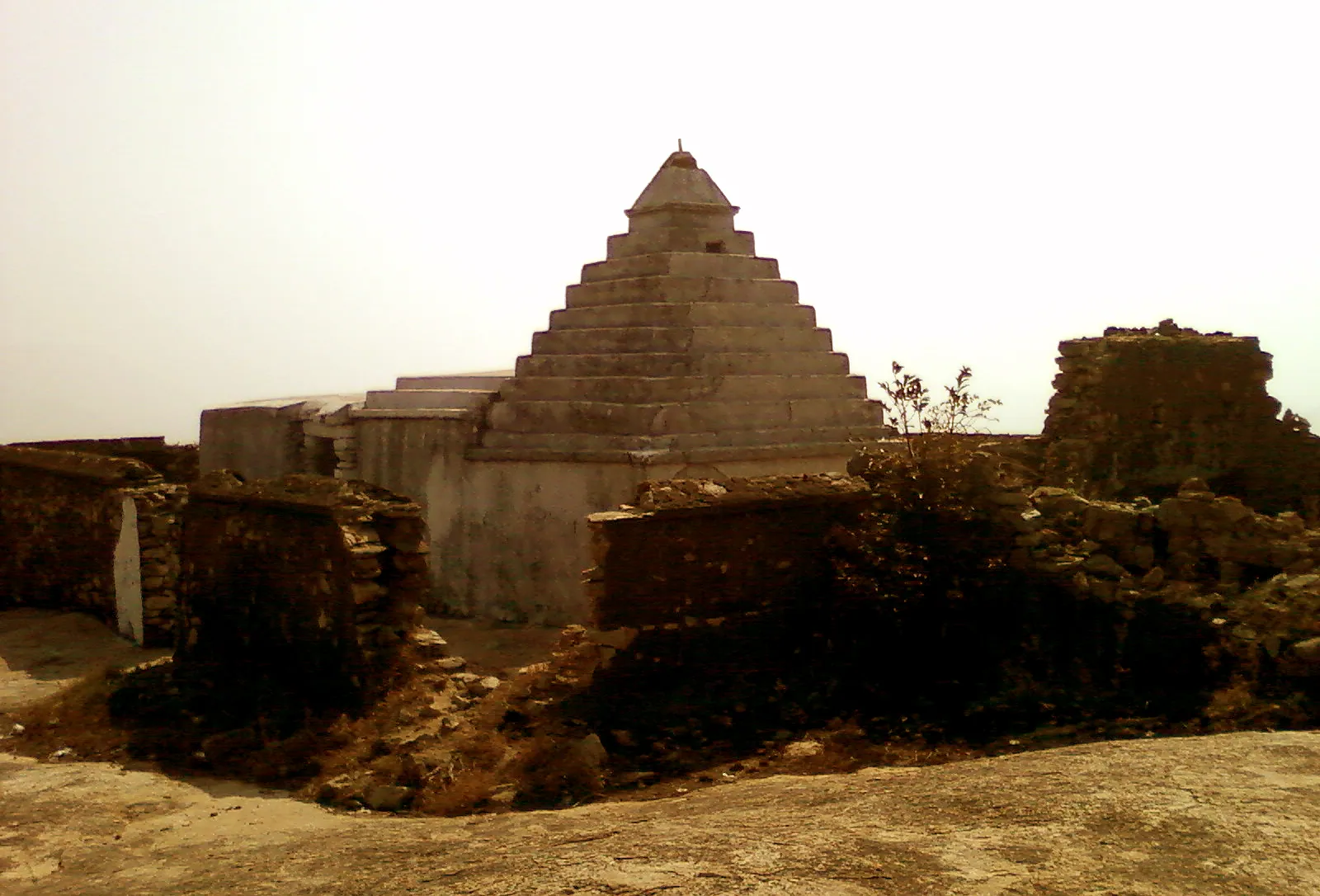
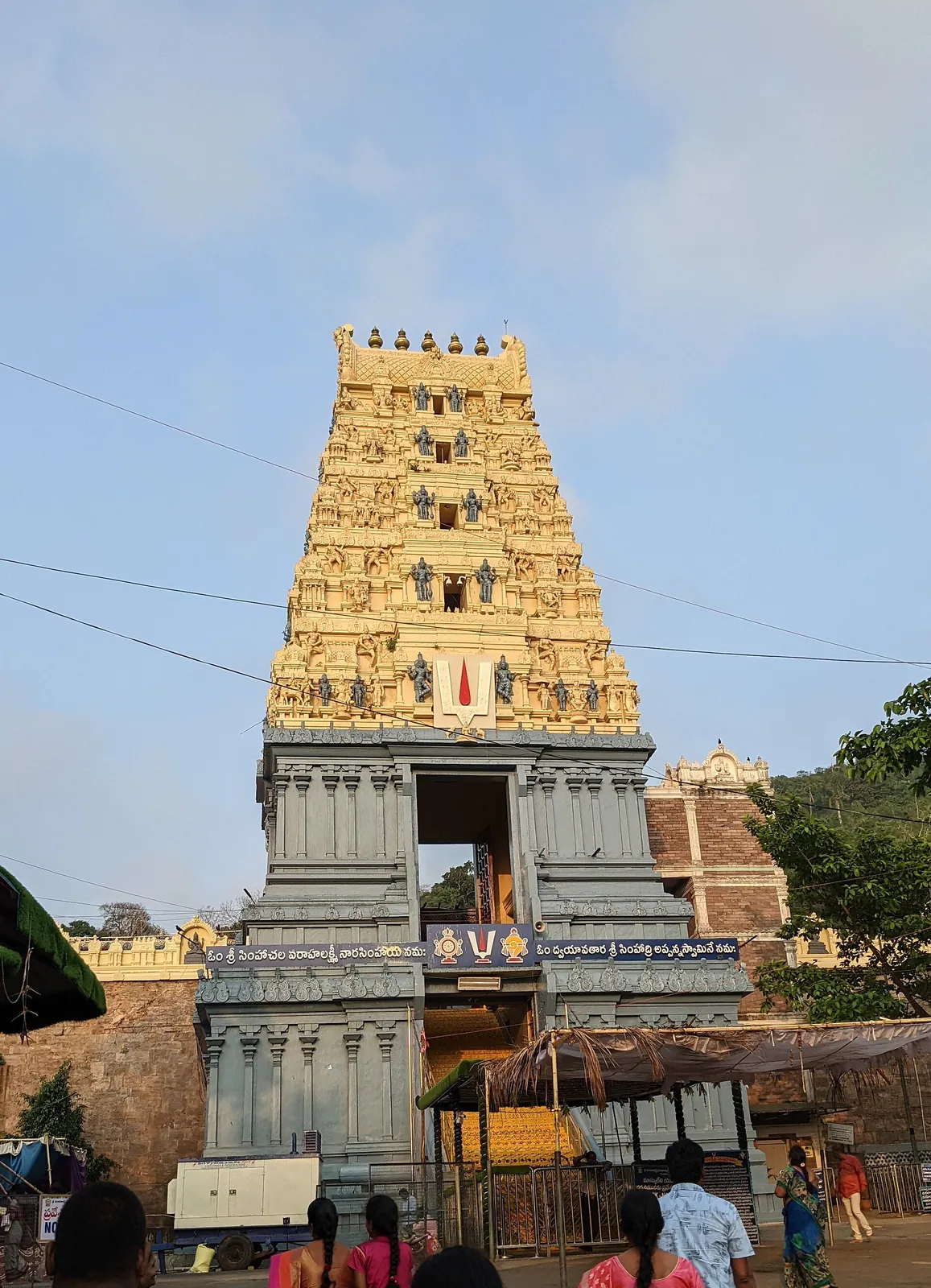
The temple stands on the hill about 244 m above sea level according to the district portal; Incredible India gives about 300 m. Built of dark granite, it has a square sanctum with a high tower, a front porch with a smaller tower, a sixteen-pillared mandapam and an enclosed verandah. From outside, its walls and five gateways look like those of a fortress.
The carvings show floral designs and scenes from the Vaishnava Puranas. On the north side is the Natya Mandapam, with 96 black stone pillars in sixteen rows of six; the Lord's Kalyanotsavam is performed here. Two old tanks serve the temple: Swami Pushkarini near the shrine and Gangadhara at the foot of the hill.
Simhachalam
Chandanotsavam and festivals
Chandanotsavam is the great day of the year. In 2025 the rituals began at 1 AM with Suprabhata Seva, the hereditary trustee had the first darshan, and general devotees were admitted from about 2:30 AM. Deccan Chronicle reported nearly 1.5 lakh pilgrims that year; in 2026 about 90,000 had taken darshan by 6 PM.
After Chandanotsavam the Lord is covered again with sandal paste, and further offerings of sandal follow on full-moon days, including Jyeshtha, Ashadha and Sravana Purnima. On the day after the Giri Pradakshina, more than 100 kg of sandal paste is offered.
Other festivals include the Kalyanam in March–April, Visakha Purnima in May, and Uttara Dwara (north gate) darshan on Vaikuntha Ekadasi, when the Lord is decorated as Vaikuntha Narayana.
Simhachalam
Visitor guide
Incredible India's weather table for Visakhapatnam shows January as the coolest month and May as the hottest, so a winter visit is easier on the climb. Chandanotsavam falls in the heat of April–May, so carry water and expect long queues.
Paid Rs. 100 and Rs. 300 darshan tickets are sold at the temple and at QR-code kiosks at the hilltop bus stand. For Chandanotsavam, tickets are sold online and at designated banks for a few weeks beforehand, and only free buses go up the hill on the day.
The hilltop gives wide views of Visakhapatnam. Pilgrims coming to Simhachalam can also visit ISKCON Gambheeram, the Hare Krishna temple in Visakhapatnam.
Gallery
Simhachalam in pictures
Plan your darshan
Darshan & seva timings
- Darshan (as listed by Incredible India)7:00 AM – 4:00 PM and 6:00 PM – 9:00 PM
Timings change on Chandanotsavam and other festival days. Please confirm current timings with the temple before you travel.
Main festivals
Chandanotsavam (nija rupa darshan)
Vaisakha Shuddha Tadiya (Akshaya Tritiya), April–May
Kalyanam
March–April
Visakha Purnima
May
Giri Pradakshina (32 km walk around the hill)
Ashadha Purnima, June–July
Uttara Dwara darshan
Vaikuntha Ekadasi, December–January
How to reach
Getting to Simhachalam
Simhachalam is within Visakhapatnam, about 16 km from the city, and is connected by both road and rail.
By road
Simhachalam is connected to Visakhapatnam city by road.
By train
Visakhapatnam railway station is the nearest major station; Simhachalam is also connected by rail.
By air
Visakhapatnam International Airport is the nearest airport.
Location
Location & directions
Sri Varaha Lakshmi Narasimha Swamy Devasthanam, Simhachalam, Visakhapatnam, Andhra Pradesh
Good to know
Frequently asked questions
When can I see the original form of Simhachalam Narasimha Swamy?
Only on Chandanotsavam day, Vaisakha Shuddha Tadiya (Akshaya Tritiya), in April or May. On all other days the Lord is covered in sandal paste. In 2026 Chandanotsavam fell on April 20.
When is the Simhachalam Giri Pradakshina?
It is held on Ashadha Purnima (June–July), when devotees walk about 32 km around Simhachalam hill. The walk begins at Toli Pavancha at the foot of the hill, and the next day the Lord receives a fresh offering of sandal paste.
What are the darshan timings?
Incredible India lists 7:00 AM – 4:00 PM and 6:00 PM – 9:00 PM. Timings change on festival days, so please confirm with the temple before you travel.
How much are the darshan tickets at Simhachalam?
In March 2026 The Hans India reported two paid darshan tickets, Rs. 100 and Rs. 300, which can also be bought by scanning a QR code at kiosks at the hilltop bus stand and PRO office. Chandanotsavam has its own ticket categories, announced each year.
Who has the first darshan on Chandanotsavam?
The hereditary trustee of the temple, P. Ashok Gajapathi Raju, and his family receive the first nija rupa darshan, after which the state government offers silk clothes and common devotees are admitted in the early hours.
Can I take my mobile phone on Chandanotsavam day?
For Chandanotsavam 2026 the Executive Officer asked devotees not to carry mobile phones or electronic gadgets to the temple. Private vehicles were also restricted on the hill road, and free buses carried devotees up.
Why does the Simhachalam temple face west?
Incredible India notes that, unlike most temples, Simhachalam faces west rather than east. It does not give an agreed reason, so we do not state one here.