Overview
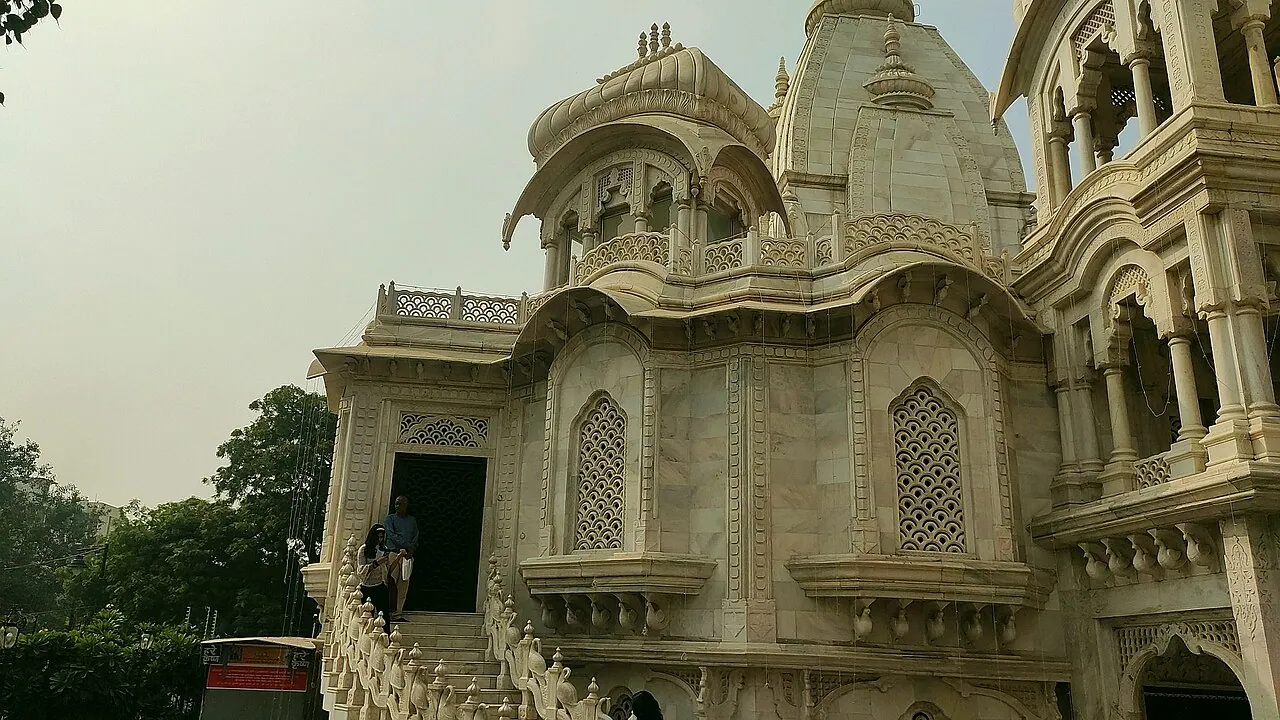
Rupa Goswami's temple of Govinda: a vast red sandstone hall of 1590 built by Raja Man Singh of Amber, partly destroyed under Aurangzeb, now protected by the ASI.
History & significance
The story of Govindaji, Vrindavan
Srila Prabhupada writes that Rupa Goswami built the Govindaji temple, just as Sanatana built Madana Mohana (CC Adi 7.164, purport). The Chaitanya Charitamrita describes Govinda seated on a jewelled throne in Vrindavan, served by thousands, with Haridasa Pandita as chief servitor (CC Adi 8.50–66). Raghunatha Bhatta Goswami had his disciples build a temple for Govinda and gave Him a flute and shark-shaped earrings (CC Antya 13.131).
According to the temple's hereditary sevaits in Jaipur, Govinda revealed Himself to Rupa Goswami at Goma Tila in 1525. Prabhupada recounts that Raja Man Singh offered money to Rupa Goswami, who asked him to build a fine temple for Govinda.
An inscription records that Man Singh of Amber built the temple in 1590 CE, says the Archaeological Survey of India. Prabhupada said it once had seven storeys and that four were broken under Aurangzeb. The Deities were taken away for safety and are now worshipped at the Govind Dev Ji temple in Jaipur.
Highlights
- Temple of Srila Rupa Goswami's Deity, Govinda
- Built in 1590 CE by Raja Man Singh of Amber (inscription)
- Cross-shaped hall with a vaulted ceiling, showing Mughal influence
- No figure sculpture in its decoration, unusual for a temple
- ASI-protected monument in Vrindavan
- The original Deity is now in Jaipur
Govindaji, Vrindavan
Govinda in scripture
The Chaitanya Charitamrita describes Sri Sri Radha-Govinda seated on a jewelled throne beneath a desire tree in Vrindavan (CC Adi 1.16). Prabhupada explains that Govinda is worshipped by those who wish to serve the Lord with strong attachment (CC Adi 1.19, purport).
Krishnadasa Kaviraja names Haridasa Pandita as the chief servant of Govinda and describes the thousands who served in His temple (CC Adi 8.50–66).
Govindaji, Vrindavan
Architecture
The ASI describes three connected shrines, a closed mandapa with a pyramidal roof and a large assembly hall entered from three sides through two-storey porticos. The central hall is cross-shaped with an imposing vaulted ceiling.
The vaults, balconies and bracketed arches reflect Mughal style, and there is no figure sculpture inside or out. The central shrine was destroyed during Aurangzeb's reign.
Plan your darshan
Darshan & seva timings
- DarshanPlease confirm current timings locally
No official timetable was found for the Vrindavan Govindaji temple. Please confirm current timings with the temple before you travel; they change on festival days and special occasions.
Main festivals
Sri Krishna Janmashtami
Bhadrapada, August–September
Radhashtami
Bhadrapada, August–September
How to reach
Getting to Govindaji, Vrindavan
Vrindavan is roughly 1,700 km from Visakhapatnam by rail. Take a train to Mathura Junction, or fly to Delhi or Agra, and continue by road.
By road
Vrindavan is reached by road from Mathura; autos and e-rickshaws reach the temple in the town.
By train
Mathura Junction is the nearest major railway station.
By air
Agra airport and Delhi's Indira Gandhi International Airport are the nearest airports.
Location
Location & directions
Govind Dev Temple, Vrindavan, Mathura district, Uttar Pradesh
Good to know
Frequently asked questions
Who built the Govind Dev temple in Vrindavan?
An inscription records that Raja Man Singh of Amber built it in 1590 CE. Srila Prabhupada explains that he did so on the advice of Rupa Goswami, who had found the Deity of Govinda.
Where is the original Govinda Deity now?
In Jaipur. The Deity was moved for safety during Aurangzeb's reign and is worshipped today at the Govind Dev Ji temple in the City Palace complex.
Why does the temple look incomplete?
The ASI notes that the central shrine was destroyed under Aurangzeb. Prabhupada said the temple once had seven storeys and four were broken.
What is special about its architecture?
The ASI describes a cross-shaped hall with a vaulted ceiling, balconies and bracketed arches in the Mughal manner, and notes the absence of figure sculpture. UP Tourism calls it one of the most impressive temples in North India.